Friday, 19 December 2014

Title and Font Research

Title and Font Research


This is the idea we have for our title research. The red font colour is common in horror films as it indicates to the audience violence is likely in the film, as the colour connotes blood and danger, which is what the audience would be expecting from a horror film. The text and font is bold and clear, which allows the title to stand out clearly against the background. The black, stormy background suggests to the audience the film takes place at night perhaps and it also has connotations of early horror films as they often used storms to represent danger and horror.

Thriller Conventions

Thriller Conventions

Thriller film conventions:
  • Antagonist- Normally have twisted views of the world and they normally believe there actions can solve the worlds problems, they are normally psychopathic and in certain films they are portrayed as smart and thinking through there plan methodically, such as in Seven.
  • Setting- Thrillers are normally set in very corrupt areas such as cities, haunted buildings, prisons etc, the dark streets in the city provide tense and mysterious backdrop.
  • Protagonist- They are normally male characters who are going through a normal day, but in the film they are suddenly sent into an extraordinary plot.
  • Themes- The director will normally put a number of themes into a film, the plot for example will normally revolve around some kind of mystery or some complicating conspiracy. Some films are designed around a theme such as Seven which is based aroun the seven deadly sins, these themes are placed around the whole film.
  • Sound- The sound used in thrillers is crucial to showing the mood of the film, in thrillers the sound provides the most tension and suspense and it can make shots appear very menacing and dramatic to the audience
  • Editing- The director will often use jump cuts as it often makes the film flow better and allows the film to make sense to the audience, it can also help build suspense in the audience and can cause jump scares, in some situations, it can also be used to show one of the characters is nervous and this can add tension to the scene this was widely used in the film District 9.

Monday, 8 December 2014

To do list this week

1) Questionnaire Evaluation - explain your findings and how this has influenced your film trailer

2) Title Research of films in your genre then create practise titles and explain what is effective and why

3) Sound Research

4) Online Tutorials to help with the filming and editing

5) Animatic Storyboard

6) Stereotypical props and character types featured in the opening - explain that the antagonist photos featured in the trailer are conventional as the detective often looks at the suspects.  The antogonist is a stereotypical representation as he is a convicted criminal, male, middle-aged, serious and intimidating etc.

Thursday, 4 December 2014

Questionnaire feedback- What you expect to see in a Horror trailer


The question that asked what you expect to see in a horror film helped us a lot. The main answers were Murders, suspense and jump scares. In our trailer we will try to use all of these things throughout. We will try to create suspense by using creepy music, the creepy music will also link with jump scares. In the trailer the main antagonist is a serial killer so there will definitely be murder shown in our trailer.

Questionnaire feedback- Does blood and gore appeal to you?

Questionnaire feedback- Favourite Horror/Thriller film


When we asked what people's favourite film was the most popular answer was Taken. Taken's genre is a thriller, which is going to be the genre of our film, so with it being people's favourite film it shows the thriller genre is fairly popular.

Questionnaire feedback- Favourite Horror Sub-genre


When asked what their favourite horror sub genre was  the majority of people said thriller, So we decided to make our film a Thriller. Before we recorded this questionnaire, we were unsure whether to do a thriller or a psychological horror.

Questionnaire feedback- Protagonist


Questionnaire feedback- Antagonist


The questions on the Antagonist also helped us a lot. Our group was unsure whether to make the antagonist visible or non visible. The results of the question swayed us in favour of visible, with 65% of people saying so. Also the results of the question on antagonist characteristics helped us show what the character will be like in the trailer. In the trailer the antagonist is seen to be creepy, mentally unstable and intimidating.

Questionnaire feedback- Location


When deciding our location the questionnaire results helped us massively, as we were unsure on where the film would be located. With 40% of the people saying to use a house, we decided to use that. Also we agreed with 20% of the people as we chose to film some of our shots outside near a park.

Questionnaire feedback- Age and Gender


These results show that the majority of people we asked were between the ages of 16-20, also it shows the most of the people we asked were male. We decided to set our age certificate to 15, so the questionnaire results are still helpful to us as only 5% of the people we asked were under 15.

Institution research

Institution Research

These are the six major film institutions (The Big Six). Film institutions are very important as they provide the money for films to be made, and without them, no one would ever get enough money to make a decent budget film. These companies also own studios, providing places in which major films can shoot exactly what they want. The only problem with film institutions funding a film is that they like to have complete control over the project, so if you go to them for money your film may not end up being completely how you originally planned. They are all about making money, and this stops film advancing as an art form. However a lot of good films are made by studios and the film business wouldn't be what it is today without these major institutions.

Warner Bros studios was founded in 1903. It was formed by four brothers called the Warner brothers, and was one of the first companies to make movies with dialogue in it. They also famously started the original 'Looney Tunes', as well as many more successful cartoons. Warner Bros have a very wide range of films. They tend to make high budget movies, to make a lot of money, and their films are shown around the world. Their films appeal to a very wide range of audience as they make films from many different genres. Previous Warner Bros films include: 'Harry Potter', 'The Departed', 'The Dark Knight', 'Slumdog Millionaire', 'P.S. I Love You', 'Charlie and the Chocolate Factory', 'Troy', 'Blade Runner', 'The Wrong Man'.

Paramount Studios was founded in 1916 and is one of the oldest film institutions. Steven Spielberg is a major partner with Paramount as he is one of the leading film directors in Hollywood and this is a major contributor to Paramounts success as he has many fans and followers who will watch anything he puts out, making most of his films instant money makers. Paramount are ranked as one of the highest-grossing film studios in the world. As with Warner Bros, they make a very wide range of films which targets many different audiences with each film. Paramount films include: 'Titanic', 'Transformers' 'Indiana Jones', 'Iron Man', 'Forrest Gump', 'War of the Worlds', 'Mission Impossible', 'Shutter Island', 'Paranormal Activity' .

Sony Pictures is another of the film studios in 'the big six'. Although you wouldn't think that Sony would be in the big six it does own Columbia Pictures, which is a much more well known company. Another slightly less well known, but still widely appreciated company that they own is Tristar Pictures. As Sony are primarily associated with gaming and electronics their film side isn't as well known. Despite this, they are still one of the highest grossing companies in the world. Most of their money comes from the fact that they are already such a big company so people have heard of them so will trust in them. They also do a lot of advertising for their films through their other products (such as the PS3 gaming console). Sony Pictures films include: 'Spiderman', 'Men in Black', 'Gladiator', 'The Da Vinci Code', 'Quantum of Solace', 'Hancock', 'The Pursuit of Happyness', 'The Adventures of Tintin, 'The Social Network', 'Bucky Larson: Born to be a Star'.

Walt Disney Pictures is probably the most famous film institution, mainly because most people grow up watching most of their films and TV shows. Disney are famous for their traditional family movies and cartoons but recently have made more action films for example 'Tron' and 'Pirates of the Caribbean' to reach out to a larger target audience by doing something a bit more appealing to teens and adults. They also own a large number of institutions: Touchstone Pictures, Pixar, Marvel, and most recently Lucasfilm. Pixar are seen as one of the best film institutions in the world, as they consistently make excellent films. Their films are enjoyable for both children and their parents, making them a real money maker. Pixar and Marvel both stray from producing a large number of films, opting instead for taking their time with each one and increasing the quality of the films. The quality of the films aren't as high as Marvel , but are more 'fun'. This is what makes for millions of fans as everyone is on edge waiting for them to bring out the next film. Through these companies Disney manages to get a huge amount of money, and it is a big factor in their recent success. Disney films include: 'The Lion King', 'Toy Story 3', 'The Avengers', 'Pirates of the Carribean', 'Beauty and the Beast', 'High School Musical', 'Tangled', 'Thor', 'Finding Nemo', 'Hannah Montana', 'Bambi', 'The Princess and the Frog', 'Alladin', 'A Bug's Life' .

Universal Pictures is another major film institution. They have large theme parks around America which help promote their business, helping them make more money. Universal, like many other film institutions, make a large range of film genres to target a large market of people. They are another company that go hand in hand with Warner Bros and Paramount as they are all in it more for the money than for the art form of making films itself. However they don't disappoint bringing out big budget films that have been highly successful and have made many films that are seen to be classics for example 'E.T' and 'Jaws'. Universal films include: 'Tinker Tailor Soldier Spy', 'E.T', 'Bourne Identity', 'Despicable Me', 'Back to the Future', 'A Beautiful Mind', 'American Graffiti', 'Love Actually', 'Bruce Almighty', 'Jaws', 'American Gangster', 'Mamma Mia!', 'Jurassic Park', 'King Kong', 'Meet the Fockers', 'The Mummy'.

20th Century Fox is another very large film institution well known across the world. 20th Century Fox was one of the film institutions that started a little later compared to the other big companies. This institution is owned by a news corporation which also own the Fox television channel which helps in making them a lot of money. The TV channel has pumped out many shows that the world has loved for many years. They sometimes even make films from the TV shows they play on their channel for example 'The Simpsons Movie'. 20th Century Fox tend to make very high budget films and like many other institutions, make films for a wide range of genres. Many people criticize them and say that the company is nothing more then a logo where as other institutions have more to show for, like Universal with a theme park and Sony with its electronics. However 20th Century Fox are still a widely well known institution. Famous 20th Century Fox films include: 'Avatar', 'Star Wars', 'Independence Day', 'Home Alone', 'X-Men', 'The Simpsons Movie', 'Ice Age', 'I, Robot', 'Marley and Me', 'Taken', 'Minority Report', 'Prometheus', 'Die Hard', 'Speed', 'Alien', 'Eragon', 'True Lies', 'Titanic', 'Moulin Rouge!', 'Road to Perdition', 'Night at the Museum', 'Austrailia'.

Finally, Lionsgate Entertainment was originally formed in 1998, it is based in California where it is able to produce different types of media products from movies to TV dramas to music, Lionsgate is the most commercially successful mini major film and television distribution company in North America and the seventh most profitable movie studio, with total income estimated at around $2 billion. Although not part of "The Big Six," Lionsgate is still a widely known and successful company. Lionsgate are known for producing highly successful film franchises such as The Hunger Games series, as well as this they have also produced several successful horror films such as Cabin in the Woods, The Possession, Sinister ,Texas Chainsaw 3D, and the SAW series.

It seems that many of the large film institutions  that started right at the beginning of film making are the most successful production companies in recent times. This makes sense as they have had the most time to evolve and grow to what they are now, giving the audience the best possible films they can make for us to enjoy.

Thriller Genre History

Thriller Genre History

The first thriller film was produced by Alfred Hitchcock in 1926, it was called The Lodger and was a suspenseful Jack the Ripper story, Hitchcock is considered by many to be the father of the modern psychological thriller film as he has produced so many critically acclaimed thriller films, he was nicknamed "the master of suspense", six of his 15 films in the 20's and 30's were thrillers and almost everything he did afterwards was Thriller, he also produced The Man Who Knew Too Much.

In the 1940's and 50's, Alfred Hitchcock continued producing suspense thrillers such as the Oscar winning film Rebecca which is about a women in danger from her husband. During the 50's the use of technicolour filming techniques became more widely used, Hitchcock began to use it in his films during this time period, he produced Strangers on a Train in 1951 which was about two train passengers who both staged a series of murders trying to outwit each other.

In the 1960's the violence that appeared in thriller films increased rapidly with the release of Peeping Tom, with Carl Boehm as a psychopathic cameraman the film was released prior to Hitchcock's Psycho. After Hitchcock produced the thriller Psycho, which at the time stunned and frightened audiences for its graphic deaths and tension, the film itself is about a loner mother-fixated motel owner who kills the guests at his motel. Spy thrillers also began to appear, films like James Bond were very popular especially during this time because it was the height of the Cold War.


The 70's and 80's had spy films scattered through them and most of the James Bond films were released during these decades. The industry also see's the last Hitchcock film as he died in 1980, he released one of his last films in 1972, it was called Frenzy and it made nearly $12 million. These years also saw rapid increase in the number of slasher films and films tended to be far more violent as the industry began using improved makeup and special effects techniques.


The 90's and films today have seen a wide range of thrillers, there have been several films based on thriller novels, most famously by Stephen King. The 90's was an era of obsession based films with a stalker usually following or becoming obsessed with a certain character an example of this was The talented Mr Ripley. There was however another theme throughout the 90's and this was the hunting down of serial killers, the most famous of which is Silence of the Lambs, which received best-picture in 1991, Seven was another famous thriller of this decade. Since then the thriller genre has started to reuse elements from previous films and add more violence and brutality, an example of this includes The Last House on the Left.

Trailer billing card


We have created a billing card to go on the end of our trailer to add to the realism and make it look like a genuine film trailer. We used the layout from the film Seven's billing card to help us design ours and make it look like the real thing.

production logo


This is the production logo we have designed to add to the beginning of our trailer. The name J-RAT Media Productions comes from a combination of our filming groups names, and we thought it was effective and memorable. 

Mood board

Mood Board


This is our mood board, this represents what ideas we have for the trailer, as shown we plan to have a kind of Scream inspired film now, we have brought this in as we can easily access the locations we need, the story revolves around the escape of a convicted murder from a prison. The prisoner uses a mask to conceal there identity, which will add mystery and suspense to the trailer as we can't relate to the antagonist and this makes him appear inhuman and almost like a machine.

On the board we also have the weapon of choice our murder will be using, as we have researched we have seen that each antagonist in a slasher film has had different weapon of choice like in Texas Chainsaw Massacre the main weapon is a chainsaw, or in Halloween Mike Myers uses a kitchen knife more often than not, in our trailer the antagonist will use a meat cleaver to kill his victims.


 Our character types are also shown on screen as we see, their will still be a group of people being hunted, and the primary character in the film will be a film, this goes against what the audience would expect from a female character as we are often given a male protagonist as they appear strong and physically able to beat the antagonist.

Wednesday, 3 December 2014

Shot types in our film


This is a list of some of the shot types which will be shown shown in our trailer, we will try to use a range of shots throughout.


Over the shoulder shot- This shot will be used when Chloe is sitting down watching the news report, the over the shoulder shot will show the TV and it will tell the audience that she is watching the report.


Close up- We will use this shot when we are showing the expression on Chloe's face, this will be when she is frightened due to the lights going off.


Extreme close up- This will be shown when the Antagonist is in Chloes house. There will be an extreme close up of his eyes, he will  be seen to be very serious and intimidating which will link to his character.


Long shot- We will use a long shot when the antagonist is shown to be following one of his victims, we will also use a long shot when the Antagonist is shown to be walking away from the scene with a knife. 


Medium Shot- This will be used when Thomas is doing the news report. A medium shot is good as it shows his smart clothing, and it also shows the background, which is important because we are filming live from the scene. 

First day of filming


This is Thomas Cunningham in our film, this is the scene where he is reporting in the news about the new dangerous convicts that has escaped the metal hospital. His costume was very good and he looks like a professional news reporter due to the suit and tie and the trench coat. This will be the opening shot of the trailer, we believe it will set the scene, as this character tells the audience what the trailer entails.


Tuesday, 2 December 2014

Diary of filming


-On the 30th of November we filmed for the first time.

- The weather was good, as there was no rain, this meant we were able to film without any distractions.

- We were not able to film all of the shots

- We have filmed around half of the shots that we need to do

-We are going to look over the shots in the coming days and see if we need to re film them

- The rest of the shots needed are at a different location

-These shots will be filmed in the coming days

- We feel the quality of the shots are a lot better than last years filming

- The camera quality is very good as we used a GoPro

Monday, 24 November 2014

Targets to do this week as a group

1) Questionnaire Results

2) Script

3) Animatic Storyboard

4) Shot List

5) Mood Board

6) Diary of Filming and Editing

Film Script


starts off  near the crime scene, were Tom is reporting the murders.

THOMAS: We are now reporting  live from the scene of a murder investigation. We believe that the source of this murder is from the recent outbreaks from the West Park Avenue mental asylum.

PRODUCTION CREDITS

insides Chloes living room while she's watching the news report

THOMAS: We would advise anyone within the area to stay inside until the murderer is caught, the police have informed us that this man has the potential to go on endanger the lives of others. 

To the first murder outside under the bridge.

(long shot of a stranger being followed by the stalker.)

( reverse shot of the other end of the pathway showing murderer walking off and showing the victim laying dead in the background)

TITLES- BASED ON A TRUE STORY


ALEX:  Who is it?  (shouting, while looking at pictures of potential suspects)

( back to Chloe's living room face timing the detective/ boyfriend )

CHLOE:  This stalker person is really creeping me out Matt, when will you be home?

ALEX: I'll be a few hours, you'll be fine, don't worry about it.

CHLOE; What was that?

ALEX: what?

CHLOE: I just heard something

ALEX: Don't be silly, i'll be home soon anyway stop worrying

CHLOE: Okay try and be as quick as...

ALEX: Chloe.... who's that behind you..

she turns around and lights turn off , Chloe screams 

MURDERER:  You better hurry home. ( fade to black transition)

TITLES- STALKER 

Thursday, 20 November 2014

Match Cutting Action


A match cut

A match cut, also called a graphic match, is a cut in film editing between either two different objects, two different spaces, or two different compositions in which an object in the two shots graphically match, often helping to establish a strong continuity of action and linking the two shots metaphorically.

Shot Reverse Shot


Shot reverse shot


Shot reverse shot  is a film technique where one character is shown looking at another character (often off-screen), and then the other character is shown looking back at the first character. Since the characters are shown facing in opposite directions, the viewer assumes that they are looking at each other.   
Shot reverse shot has to be used in films because if it is not used there will always be a camera in the background, which obviously is not acceptable.

180 Degree Rule


180 degree rule

A rule stating that a camera should be placed somewhere inside 180 degrees on a particular side of the invisible line of a shot containing two people filmed in sequence. If the camera crosses the line, confusion results for the film viewers, because it makes it look like the people are switching places as one watches the film. The two characters in the scene should always have the same left/right relationship. 

Thursday, 6 November 2014

Conventions of horror films

The conventions of horror films are: murders, female with sex appeal, 'jumpy scenes' and creepy music. In a horror film the intention of the film is to scare the audience.  To scare the audience the main theme of horror films are peoples worst nightmare. So for example a serial killer, a clown or a ghost. Also tension is created by creepy music. The music is usually very slow paced. The camera shots in horror movies are mostly long shots and close ups. Close ups are used to show the facial expressions of the characters, most of the time the close ups are on the character that is being attacked. This is because it enables the audience can see and even feel their fear. Long shots are used to show the whole setting, sometimes long shots shows things creeping up behind someone, this creates tension. When the audience can see something or someone creeping up behind a person in a long shot it creates dramatic irony. 

In almost all horror films there is a teenage girl being killed. The girl is seen to be the damsel in distress. Also she is seen to be fragile and helpless. The girl always seems to be alone in a place far away from anything. This makes the girl vulnerable.

The target audience for horror films are young people aged 16-30 Many teenagers will want to watch a horror film as they will feel as if they can relate to the film. Teenagers are used most of the time in horror films. Also young people will want watch horrors as they will want to see blood and gore, which is shown a lot in horror films. The colours used in horror films are usually black and red. This is because stereo typically these colours connote evil and death. Teens would would be the target audience because they usually want to have adrenaline rushes and they also want to have the shock factor. Older people will not be the target audience as they will feel that horror films are boring and unrealistic as they would of seen many before.

Age certificate

Age certificates


Films under this category do not have limitation on the bad language that is used. Hard drugs are generally allowed, and explicit sex references along with detailed sexual activity are also allowed.

Location research

Location Research

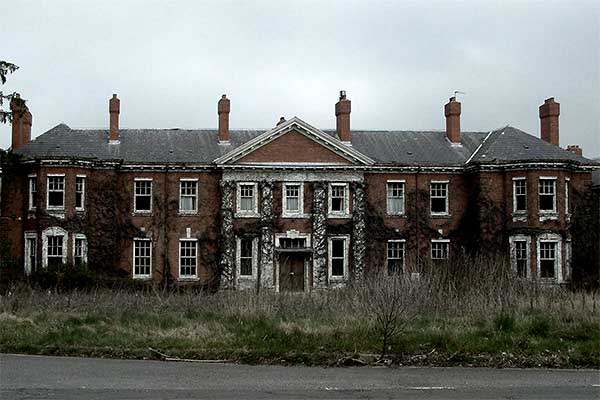
This is one of our location ideas, it is an abandoned house in Leatherhead, which makes it easy to get to as its only a 5-10 minute walk from our school. It is also an abandoned so we won't be disturbing anyone. However this location is boarded up and we don't want to risk anything illegal. We did visit the house to see what it was like but in the end we decided not to use it because of the law.


This was another idea for a location, this is west park hospital in Epsom, it is located just down the road from Epsom train station, it has the benefit for being perfect for our horror story as it used to be a mental hospital. However this location has recently been demolished and no longer has as many features as it use to have, this makes it unusable for our film ideas, along with this problem it would have also been illegal again to trespass although we could have probably emailed the relevant people to request use of the site.

For our location we came to the decision to use 40 foot recreation ground in Leatherhead as one of our location, this provides us with several ideas such as a chase scene. Another location we are going to use the house pictured, the film will be based on a murderer on the loose and he finds and murders a group of friends in this house, these are likely to be our final locations as we feel they would be most appropriate to the film.

Prop research

Prop Research


The most commonly used props in a horror movie seem to be masks and weapon-focused. A hockey mask or some form of face-covering is stereotypical of the genre, adding to the fear the antagonist instills to the audience as their identity is hidden, raising enigmas. Famous examples include Mike Myers from the Halloween film franchise and Hannibal Lecter.

               
The mask is an effective prop for this genre as part of every horror is the build-up to the antagonists reveal, showing them gradually to the audience to create suspense and tension. With the use of the mask the suspense of the film is not deflated as soon as the villain is revealed to the audience, as there are still questions raised surrounding the man behind the mask, what he really looks like and why he is after the protagonists rather than showing the full picture straight away. This is why we are thinking of using a mask in our trailer, as this will allow us to show off our villain without giving to much away and still giving the audience
questions.
Another key area for props in this genre is weapon-focused, normally what the antagonist uses to hunt down the protagonists. The most commonly used are knives (like Mike Myers, above), chainsaws (The Texas Chainsaw Massacre) and machetes (Friday the 13th), all weapons that would create a lot of blood and gore. This makes the antagonist a more credible threat and plays on audience fears of stabbing and obviously, dying. We are using a ghost/poltergeist as our villain so a weapon prop would not really be fitting with the villain so we may not use this for our film.

Wednesday, 5 November 2014

Questionnaire


These will be the questions that we will ask our audience, we hope that this will give us a better idea of what the target audience want to see.


1.What is your age and gender?

2. What would be a good location for a Horror film?
- A house
- A park
- A Forrest
- A school


3.Would you prefer the Antagonist to be a person or a ghost that cannot be seen?


4.What would you expect the Protagonist in the film to be like?


5.What would you expect the Antagonist in the film to be like?


6. What is you favourite genre within Horror?
- Blood and gore
- Ghosts
- Thriller
- Psychological


7. What is your favourite horror film? and why?


8. Would you prefer the Antagonist to be realistic or to be a character that is sub-normal?


9. Would you prefer if the Horror film is based on things that actually occur? e.g. stalking murder etc


10. Do Horror films containing blood and gore appeal to you?


11. What would you expect to see in a horror trailer?


Costume research

Costume Research

Our film is based on the idea of having 4 main characters, 3 of these will be the "victims" and a escaped murderer who is hunting them. The murderers costume will be most important as it needs to convey the evil nature of our antagonist in order to unsettle the audience and make him a credible threat. It would not make sense to have our murderer dressed in a hoodie and jeans and wearing trainers as a murderer must be psychopathic and therefore would not dress casually. Therefore the costume needs to convey to the audience the idea of the murderer being crazy and therefore be abnormal. We are already planning to have our murderer in some form of mask which will help to put across the idea of his lunacy and make him a credible threat, it also conceals the murderers identity adding mystery and suspense to the character as the audience won't be able to tell who or what is under the mask. For the rest of his costume, we thought about him wearing black, muddy, worn-out work boots to as these would be conventional footwear for a killer to use. An example would be the character Zep from the original Saw film.


The rest of the killers costume would ideally be mostly black, which has the practical benefits of making them harder to identify in shots which we can use to our advantage in teasing the character to the audience in our trailer without fully revealing him. Black trousers, a black jacket and black gloves with the mask would make our killer look creepy and reveal almost nothing about him to the audience, further helping to make the character intriguing and terrifying.


For our victims, costume-work will be easier to decide on as there is a broader range of acceptable outfit. It is conventional for the victims in horror films to be relatable for the audience, making it easier to put yourself in their shoes and therefore making the scenario more frightening. This is why most of the time teenagers are the victims in these films as teenagers are the main target market for the horror genre. Our 3 victims will also be teenagers and will dress accordingly in t-shirts, hoodies and trainers. Ideally, most of the victims costumes will consist of bright colours like white in order to contrast with the darkness of the villain and to make them seem more vulnerable in a dark environment as they stand out more. Each costume should also be tailored to reflect each characters personality, helping to make them more identifiable to the audience. A good example is from the costume-work in The Cabin in The Woods, which can be seen below. You have the "jock" character wearing an American football jacket to show he is the strong, sporty and typically stupid one in the film. Then you also have the contrasting choice of costume for each of the female-characters, with the blonde woman wearing a short skirt and the ginger woman wearing jeans, making the audience sympathise more with the ginger woman as she seems more respectable and less promiscuous than the blonde woman.


We have also had an idea for a fake news report to feature in our trailer, with a news reporter setting the scene to the audience. If we end up going along with the news report idea, we would likely have our news reporter in a smart suit and tie to add to the realism, as this is typically what you'd expect to see in a real life news report.